

 See My Latest Article on HelloNation
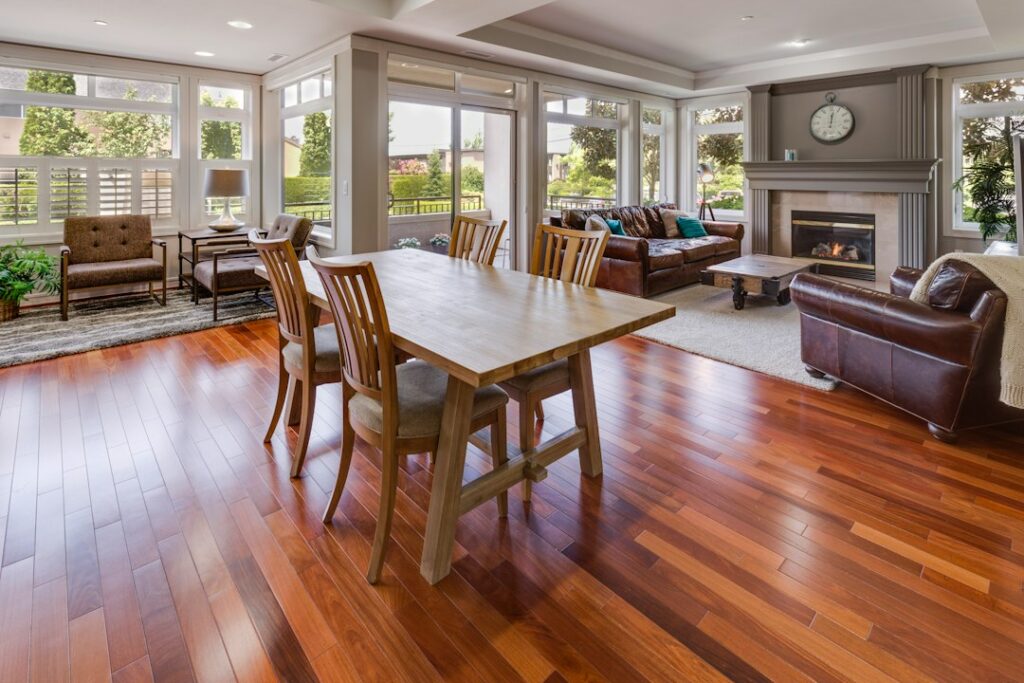
Hardwood floors can often be renewed without being removed, but refinishing is not the right answer for every floor. The decision depends on the wood’s thickness, surface damage, moisture history, layout, and the result a household expects.
In West Columbia, SC, seasonal humidity, tracked-in moisture, sunlight, and the wear associated with busy households can all affect flooring over time. A careful inspection usually reveals whether the existing floor still has useful life or whether replacement is more practical.
Is refinishing or replacing the better choice?
Refinishing is generally the better choice when the floor is structurally sound but has a worn, scratched, dull, or outdated surface. Replacement becomes more reasonable when the boards have serious water damage, widespread movement, excessive sanding, or a design that no longer works for the space.
Refinishing preserves the existing wood and usually changes the appearance with less material waste. Replacement offers more flexibility when the floor has failed mechanically or when a different board width, wood species, or layout is needed.
A floor that looks unattractive is not necessarily a floor that needs to be removed. Surface appearance and structural condition should be evaluated separately.
When does refinishing make sense?
Refinishing can correct many problems that are limited to the finish or upper surface of the boards, including:
- Dullness and uneven sheen
- Light to moderate scratches
- Scuffing from furniture or household traffic
- Faded areas near windows
- Minor stains that have not penetrated deeply
- An outdated stain color
- Small areas of finish wear near entries, kitchens, and hallways
Traditional refinishing involves removing the existing finish and a very thin layer of wood, then applying a new stain or protective coating. Some floors may need a complete sanding, while others may only need a screening or recoating process if the boards are still relatively smooth and the damage is limited to the finish.
Refinishing is especially worthwhile when the floor is made of solid hardwood with sufficient remaining thickness above the tongue-and-groove joint. It may also be suitable for some engineered hardwood floors, but the usable wear layer must be thick enough for sanding. Engineered flooring should not automatically be treated like solid wood.
What problems cannot be solved by refinishing?
Refinishing cannot correct every flooring problem. It changes the surface but does not rebuild damaged boards or correct an unstable subfloor.
Replacement or partial board repair may be necessary when the floor has:
- Boards that are soft, crumbling, or split through their full thickness
- Severe pet or plumbing stains that have penetrated deeply
- Buckling, cupping, or crowning caused by moisture
- Widespread gaps caused by movement or installation problems
- Loose boards that continue to shift after fastening
- Repeated sanding that has exposed nails or weakened the board profile
- Mold-like odors or suspected moisture below the floor
- Areas that were removed or damaged during wall changes
Water-related movement deserves special attention. In a humid climate, wood can expand during damp periods and contract during drier conditions. Normal seasonal movement does not always mean the flooring has failed, but persistent warping, dark staining, or softness can indicate a moisture source that must be addressed before any surface work.
How can you tell whether a floor has been sanded too many times?
Look at the exposed edge of a board near a floor vent, doorway, or transition. If the top of the tongue-and-groove joint is very close to the surface, there may not be enough wood left for another full sanding. Visible nail heads, extremely thin boards, or a floor that has already been sanded several times are warning signs.
A flooring specialist may inspect an inconspicuous area or use measurements to estimate the remaining wear layer. This matters because sanding too deeply can expose fasteners, weaken boards, and create an uneven floor.
The age of the floor alone does not determine whether refinishing is possible. A relatively old floor may have plenty of usable wood if it has received little sanding, while a newer floor may have limited remaining thickness after repeated renovations.
When is replacement more practical than refinishing?
Replacement may be the more sensible option when repairs would be extensive or when the existing floor cannot provide a consistent finished appearance.
For example, replacing the floor may make more sense if half of the boards have deep stains, multiple rooms have different flooring heights, or earlier repairs have created a patchwork pattern. A replacement can also be practical during a major remodel when cabinets, walls, or room boundaries are already being changed.
New flooring may allow a household to address related issues at the same time, such as an uneven subfloor, inadequate transitions, damaged underlayment, or a recurring moisture problem. However, removing the boards does not eliminate the need to identify why damage occurred. Installing new wood over an unresolved moisture issue can lead to the same failure again.
What about a floor that is only damaged in a few areas?
A full replacement is not always necessary for localized damage. Individual boards or small sections can sometimes be removed and replaced, followed by blending or refinishing the surrounding area.
Spot repairs are most successful when matching wood species, width, thickness, grain direction, and aging characteristics are available. Perfect color matching can be difficult because existing wood changes tone over time, especially in rooms exposed to direct sunlight.
A repair may remain slightly visible under certain lighting. That does not necessarily mean the work failed; natural wood variation and years of aging can make a completely invisible patch unrealistic.
How do humidity and household habits affect the decision?
Wood flooring performs best when indoor humidity remains reasonably stable. Large swings can increase shrinking, swelling, cracks, and gaps. Wet shoes, damp rugs, plant containers, pet accidents, and leaks near plumbing can create concentrated damage even when the rest of the floor is healthy.

Before refinishing or replacing, check for:
- Leaks around sinks, dishwashers, toilets, and appliances
- Damp crawl spaces or basements
- Wet rugs placed over the floor for long periods
- Poor ventilation in rooms with frequent moisture
- Direct sunlight that has faded only part of the floor
- Furniture or rugs that have hidden discoloration
A dehumidifier, leak repair, breathable rug pad, and prompt cleanup may help protect a sound floor. These steps will not repair damaged wood, but they can prevent a cosmetic problem from becoming a structural one.
Which option usually costs less?
Refinishing generally costs less than replacing a floor when the boards are in usable condition and the room does not require extensive repairs. Replacement involves demolition, disposal, new flooring, possible subfloor work, installation, transitions, and finishing.
The lowest initial cost is not always the lowest long-term cost. Refinishing a floor with severe moisture damage may lead to another project soon afterward. Conversely, replacing a floor that only needs a new finish may discard durable wood unnecessarily.
A sound decision compares the condition of the existing boards with the expected service life after the work, not just the price of the first step.
A practical decision guide
Refinishing is usually a strong candidate when:
- Damage is mostly scratches, dullness, or finish wear
- Boards remain firm and reasonably flat
- There is enough wood for safe sanding
- Moisture problems have been corrected
- The household likes the existing floor layout
Replacement deserves serious consideration when:
- Damage reaches through many boards
- Moisture has caused persistent distortion
- The floor has little usable wear layer remaining
- Repairs would be scattered across several rooms
- The subfloor or layout also needs major work
For many homes, the right answer is a combination: repair a few boards, refinish the sound areas, and replace only sections that cannot be restored. That approach can preserve usable hardwood while addressing the parts that have genuinely reached the end of their serviceable life.